CyanBio2
Sustainable production of bioplastics and natural pigments from cyanobacteria in wastewater effluents
- https://agrotech.upc.edu/en/projects-events/cyanbio2
- CyanBio2
- 2022-09-01T08:00:00+02:00
- 2025-08-30T09:00:00+02:00
- Sustainable production of bioplastics and natural pigments from cyanobacteria in wastewater effluents
Sep 01, 2022 08:00 AM to Aug 30, 2025 09:00 AM (Europe/Madrid / UTC200)

Research group: GEMMA. Environmental Engineering and Microbiology Group
Project: CyanBio2
Target audience
The industrial sector related to the bioeconomy and wastewater treatment, as well as policymakers and organisations involved in sustainable development and the transition towards a circular economy.
Project objective
To develop a sustainable process for valorising cyanobacterial biomass, obtaining high-value-added bioproducts such as biopolymers and pigments, while promoting the replacement of fossil-based materials.
A step forward in the valorisation of microalgal biomass to obtain biopolymers suitable for conversion into bioplastics, together with pigments, thereby replacing fossil-based materials.
Project description
Microalgae-based wastewater treatment systems have demonstrated that nutrients can be recovered from wastewater and valuable biomass produced for agricultural applications, while energy can also be recovered through the anaerobic digestion of residual biomass. The project Cyan2Bio, involving the Environmental Engineering and Microbiology Group (GEMMA) at the Universitat Politècnica de Catalunya - BarcelonaTech (UPC), the University of Almería (coordinator) and the Miguel Hernández University of Elche, aims to advance this approach.
To achieve this, Cyan2Bio will determine the microbiological and engineering aspects of the microalgae valorisation process and, more specifically, identify the molecular mechanisms underlying microbiological phenomena. First, strains and optimal growth and operating conditions will be selected, followed by the scaling up of technologies and processes. A biorefinery concept will also be applied to maximise the social, environmental and economic sustainability of the entire system. As a result, the Cyan2Bio project will develop a sustainable process for producing bioproducts from cyanobacteria, including biopolymers (PHB) and pigments (phycobiliproteins), as well as biogas generated from the residual biomass remaining after the extraction of valuable compounds.
More specifically, the objectives can be broken down into the following steps:
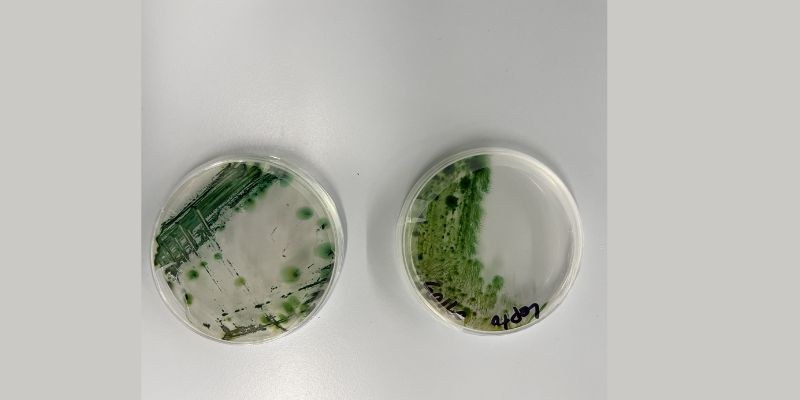
- Isolate, select and cultivate cyanobacterial strains for biopolymer production.
- Develop a process for large-scale cyanobacterial production and biomass valorisation.
- Evaluate the final bioproducts.
- Assess the environmental and social impacts of the bioproduct production process.
Impact
The Cyan2Bio project will expand the portfolio of products and services already obtained from microalgae and contribute to replacing conventional, less sustainable materials derived from terrestrial resources. In addition, the project will support the scalability of the microalgae sector by demonstrating the feasibility of producing green, sustainable and safe products.
Funded through the State Programme for R&D&I of the Ministry of Science, Innovation and Universities

Share: