MicroÚs
Reducing copper use in horticultural crops through microencapsulation technology
- https://agrotech.upc.edu/en/projects-events/microus
- MicroÚs
- 2022-08-01T09:00:00+02:00
- 2024-05-30T10:00:00+02:00
- Reducing copper use in horticultural crops through microencapsulation technology
Aug 01, 2022 09:00 AM to May 30, 2024 10:00 AM (Europe/Madrid / UTC200)

Research group: Agricultural Mechanisation Unit (UMA)
Project: MicroÚs. Reducing copper use in horticultural crops through microencapsulation technology
Web: Microús
Who is the project aimed at?
Horticultural producers, agricultural technicians, plant protection product companies and agricultural policymakers interested in reducing the environmental impact of copper-based treatments in intensive farming and improving the efficiency of resource use
Project objective
To demonstrate that using a microencapsulated copper formulation makes it possible to reduce the amount of product applied without compromising disease control efficacy, thereby improving the environmental and economic sustainability of intensive horticultural crops.
Project description
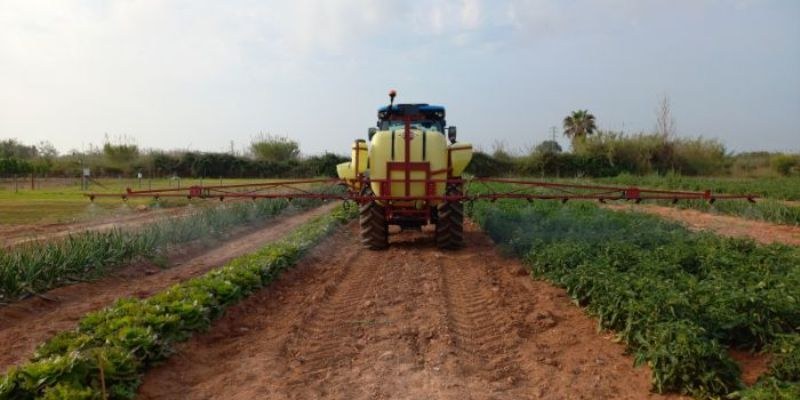
Repeated application of copper-based pesticides is a major source of agricultural soil contamination. In addition, current European regulations restrict their use, making it necessary to find more efficient alternatives. In this context, the Agricultural Mechanisation Unit (UMA) at the Universitat Politècnica de Catalunya - BarcelonaTech (UPC) is participating in microÚs, a project aimed at validating the effectiveness of a new microencapsulated copper formulation in horticultural crops such as lettuce, onions and tomatoes.
This formulation improves copper retention on leaves, even under washing conditions, thereby increasing its persistence and allowing lower application rates. In addition, the project evaluates the product's biological efficacy against diseases such as downy mildew and analyses the reduction of pesticide residues in food.
The project's demonstration activities will quantify the economic benefits (reduced fungicide purchases and fewer applications) and environmental benefits (less machinery use and lower fuel consumption). This represents a direct contribution to the sustainability of horticultural crops and the reduction of their carbon footprint.
Co-funded by the European Union (European Agricultural Fund for Rural Development) and the Department of Climate Action, Food and Rural Agenda 

Share: