RECYBUILDMAT
Recycling fibres from textile and agricultural waste for use in sustainable construction materials
- https://agrotech.upc.edu/en/projects-events/recybuildmat
- RECYBUILDMAT
- 2020-05-01T13:00:00+02:00
- 2024-05-30T14:00:00+02:00
- Recycling fibres from textile and agricultural waste for use in sustainable construction materials
May 01, 2020 01:00 PM to May 30, 2024 02:00 PM (Europe/Madrid / UTC200)

Research group: TECTEX. Textile Technology Research Group.
Project: Recycling fibres from textile and agricultural waste for use in sustainable construction materials.
Who is the project aimed at?
The construction materials sector, manufacturers of large-format packaging materials and gardening containers interested in reducing environmental impact and adopting more sustainable materials.
Project objective
To design new materials for sustainable construction with a high content of recovered raw materials derived from maize or rice cultivation and reinforced with nonwoven fabrics made from fibres recovered from textile waste. Used in ventilated façade panels, floating floors and reinforcement boards for masonry, these materials will help improve building energy efficiency and reduce emissions generated by the construction sector.
Project description
The working hypotheses of this project aim, on the one hand, to reduce CO2 emissions — the construction sector accounts for one third of these emissions — and, on the other, to make use of the large volume of textile waste and agricultural by-products.
To address these environmental challenges, the project is developing:
- Fibres from textile waste and nonwoven fabrics suitable for cement reinforcement
- Nanosilica derived from agricultural by-products for use as an additive in cement or lime pastes
- Matrices with a lower cement content
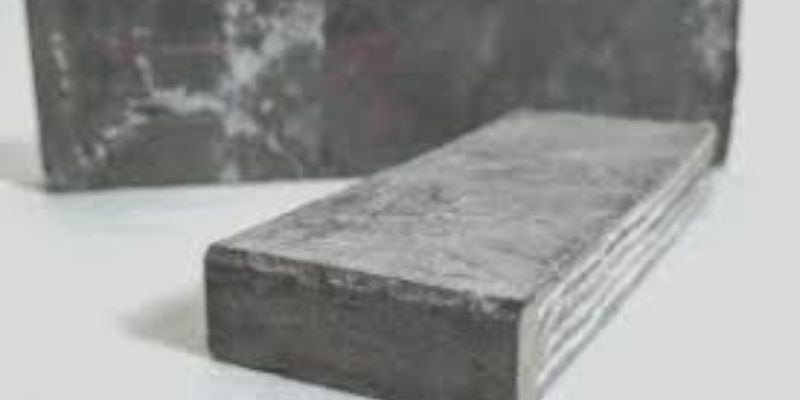
- Composite boards based on cement or lime, reinforced with nonwoven fabrics made from textile and agricultural waste
- Construction products for multiple applications
- Assessment of the environmental impact of cement composites reinforced with nonwovens made from textile and agricultural waste.
Project funded by the STATE PLAN FOR SCIENTIFIC AND TECHNICAL RESEARCH AND INNOVATION 2017–2020

Share: